


Table of Contents
ToggleIntroduction
Choosing the right headset can make a noticeable difference to everyday business communication. When employees spend hours on Teams meetings, Zoom calls, customer conversations or internal discussions, poor microphone quality, uncomfortable ear cushions or unreliable connections can quickly become frustrating.
For businesses in Nigeria, the choice is even more practical. A headset may need to work with laptops, desktop computers, smartphones, VoIP systems or collaboration platforms while remaining comfortable enough for several hours of use.
This guide explains what to look for when buying office headsets, compares wired and wireless options, and highlights headset types that suit offices, call centres, executives and remote workers.
Table of Contents
- Introduction
- What Is an Office Headset?
- Why Office Headsets Matter for Business Calls
- Key Features to Look For
- Wired vs Wireless Office Headsets
- Noise Cancellation: ANC vs Noise-Cancelling Microphones
- Best Office Headset Types for Different Users
- Headset Options to Consider in Nigeria
- How Much Do Office Headsets Cost?
- Common Buying Mistakes
- Best Practices for Business Headset Deployment
- Future Trends in Office Headsets
- Conclusion
- FAQs
What Is an Office Headset?
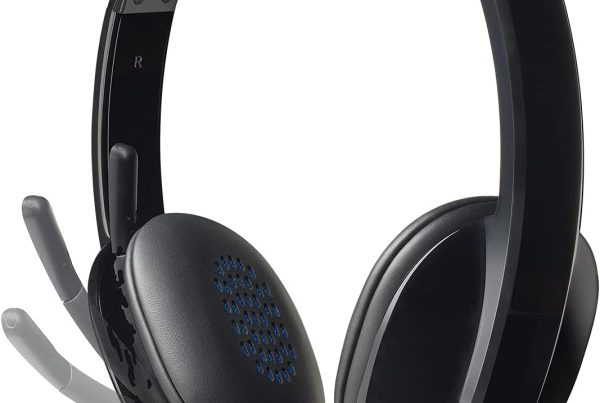
An office headset is an audio device designed for two-way communication, combining headphones or earpieces with a microphone. Unlike ordinary headphones, a business headset is built around communication, making it useful for phone calls, video meetings, customer service and unified communications.
A typical office headset may connect through USB, USB-C, Bluetooth, a 3.5mm audio connection, or specialised telephone interfaces.
For business users, the microphone is particularly important. Hearing your colleague clearly is only half of a successful conversation. The other person needs to hear you without excessive keyboard noise, conversations, fans or other background sounds.
Why Office Headsets Matter for Business Calls
A good headset does more than make meetings sound better. It can create a more consistent communication experience across an organisation.
For example, imagine a customer service team working in an open-plan office. Several agents may be speaking simultaneously while keyboards, air conditioners and other equipment create additional noise. A basic headset may capture much of that sound.
A suitable call centre headset with a noise-cancelling microphone can help separate the speaker’s voice from surrounding distractions.
For remote employees, the environment is different but the problem remains. A home office may be quieter, yet traffic, family members, generators, fans or construction noise can interrupt meetings.
This is why headset selection should be based on the user’s environment rather than simply choosing the most expensive model.
Key benefits
- Clearer voice communication
- Reduced background noise
- More focused virtual meetings
- Hands-free calling
- Greater comfort during long calls
- Easier communication in open offices
- Better flexibility for hybrid workers
- Compatibility with collaboration platforms
- More professional customer interactions
Key Features to Look For in Office Headsets
The right headset is a combination of several features. No single specification determines whether a model is suitable for every employee.
1. Microphone quality
For business calls, microphone performance should be one of the first things you check.
A good microphone should capture the speaker’s voice clearly while reducing unwanted sounds around them. This is especially important for call centres, reception desks and open-plan offices.
A long boom microphone positioned close to the mouth can also provide more consistent voice pickup than a poorly positioned microphone.
2. Noise cancellation
Noise cancellation can refer to different technologies.
A noise-cancelling microphone is designed to reduce unwanted sound captured by the microphone. This helps the person on the other end hear your voice more clearly.
Active Noise Cancellation, or ANC, works differently. It is primarily designed to reduce ambient sound that the headset wearer hears.
Therefore, if your biggest complaint is “people on my calls can hear everything around me,” prioritise microphone noise cancellation.
If your problem is “I can’t concentrate because the office is noisy,” ANC can be useful.
3. Connectivity
USB remains a practical choice for many office computers because it is simple to deploy and does not require Bluetooth pairing.
Bluetooth, however, offers greater mobility. It can be useful for professionals who move between a laptop and smartphone during the working day.
Some business headsets also provide dual-device connectivity, allowing users to work across multiple devices without repeatedly disconnecting and reconnecting.
4. Comfort
Comfort is easy to overlook when purchasing equipment for an entire team.
A headset that feels fine for 20 minutes may become uncomfortable after several hours.
Look for:
- Lightweight construction
- Adjustable headbands
- Soft ear cushions
- Comfortable clamping pressure
- Flexible microphone arms
- Appropriate ear-cup size
For employees who spend most of their day on calls, comfort should be treated as a productivity consideration rather than simply a luxury.
5. Mono or binaural design
A mono headset has one earpiece, while a binaural headset has two.
Mono models can be useful for receptionists, office administrators and call centre workers who need to remain aware of colleagues and activity around them.
Binaural models cover both ears and can be useful when concentration is important, especially in busy offices.
6. Platform compatibility
Before buying in bulk, confirm compatibility with the software employees actually use.
Common platforms include:
- Microsoft Teams
- Zoom
- Google Meet
- Google Voice
- VoIP applications
- Softphone systems
Microsoft maintains a current catalogue of certified and qualified Teams devices, including models from Logitech, Dell, Poly, Yealink and EPOS. This makes platform compatibility worth checking during procurement.
Wired vs Wireless Office Headsets
Wired and wireless headsets solve different workplace problems.
Feature | Wired Headset | Wireless Headset |
Connection | USB, USB-C or audio cable | Bluetooth or wireless receiver |
Mobility | Limited | High |
Battery | Not required | Required |
Setup | Usually simple | Pairing may be required |
Call-centre use | Very practical | Useful for mobile workflows |
Desk work | Excellent | Excellent |
Movement during calls | Limited | Better |
Maintenance | Generally simple | Battery and charging required |
When should you choose a wired headset?
A wired model is a practical choice when employees normally remain at their desks.
It can be especially suitable for call centres, administrative teams and large office deployments where simplicity and predictable connectivity matter.
Models such as the Logitech H390 provide USB connectivity and a noise-cancelling microphone, making this type of headset suitable for straightforward computer-based communication.
When should you choose a wireless headset?
Wireless headsets make more sense when mobility is part of the job.
An executive may want to move away from the desk during a meeting. A hybrid employee may switch between a laptop and phone. A manager may need to walk around the office while remaining connected.
Wireless headsets also reduce cable clutter around workstations.
However, they introduce another consideration: battery management.
For a large deployment, procurement teams should consider how employees will charge their headsets and what happens when batteries become degraded.
Noise Cancellation: ANC vs Noise-Cancelling Microphones
Noise cancellation is one of the most misunderstood headset features.
What is ANC?
Active Noise Cancellation uses electronic processing to reduce certain ambient sounds that reach the listener.
It can be useful when working near air conditioners, traffic, conversations or other continuous background sounds.
However, ANC does not automatically mean the microphone will prevent the person on the other end of a call from hearing your surroundings.
What is a noise-cancelling microphone?
A noise-cancelling microphone is designed to reduce unwanted environmental sounds picked up during speech.
This is particularly important for customer service and call centre environments.
For example, Logitech’s Zone Wired uses dual noise-cancelling microphones designed to suppress distractions such as keyboard sounds, nearby conversations and HVAC noise.
Which one should you prioritise?
Think about where the problem occurs.
If you cannot hear the meeting clearly, look at ANC and passive isolation.
If other people cannot hear you clearly, focus on microphone noise cancellation.
If both problems exist, consider a headset that provides both.
Best Office Headset Types for Different Users
Different employees have different communication needs.
IT Managers
IT teams should consider compatibility, deployment, durability and support.
For larger organisations, standardising on a small number of headset models can simplify troubleshooting and replacement.
USB headsets are often practical for fixed desktop environments, while wireless models can support employees who move between workstations.
Procurement Managers
Procurement teams should look beyond the purchase price.
Consider:
- Number of employees
- Primary connection type
- Compatibility
- Warranty
- Replacement availability
- Battery requirements
- Comfort
- Microphone performance
- Software compatibility
- Total deployment cost
A cheaper headset that needs frequent replacement may cost more over time than a more durable business-oriented model.
Business Executives
Executives may value wireless connectivity, comfort and a professional design.
A Bluetooth headset can be particularly convenient when moving between a laptop and smartphone.
Call Centre Managers
Call centres should prioritise microphone clarity, comfort and durability.
For employees taking calls throughout the day, a headset designed specifically around voice communication may be more appropriate than a consumer headphone designed mainly for music.
RapidBTS’s current Nigerian call-centre category, for example, includes Grandstream, Mairdi, Sennheiser and VT-related options across wired, wireless, mono, binaural and DECT categories.
Remote and Hybrid Professionals
Remote workers should consider the environment in which they normally work.
Someone working in a quiet private room may not need the same level of noise reduction as someone working beside a busy road or in a shared home.
Wireless models can also make hybrid work more convenient when switching between devices.
Headset Options to Consider in Nigeria
The Promallshop headset catalogue currently includes a broad mix of wired and wireless models. Availability and pricing can change, so buyers should confirm the current listing before ordering.
Logitech H390
The Logitech H390 is a straightforward USB wired headset with a noise-cancelling microphone.
It can suit users who want simple plug-and-play connectivity for computer calls without the need to manage a battery.
VT Flow
The VT Flow is a wireless ANC Bluetooth headset available through Promallshop.
It is particularly relevant for hybrid workers and professionals who want a combination of wireless connectivity and active noise cancellation.
Promallshop also has a dedicated article explaining the noise-cancelling technology and workplace use of the VT Flow.
Logitech H570e
The Logitech H570e is another wired business headset option and can be considered for office environments where users spend much of their day at a workstation.
VT9800
The VT9800 is another wireless Bluetooth model listed by Promallshop and can be considered when dual-device flexibility and wireless communication are important.
Logitech H800
The Logitech H800 provides wireless connectivity and is aimed at users who want more freedom from their desk.
It can be useful for professionals who need to move around during calls or work across different devices.
VTB320-D
The VTB320-D combines wireless connectivity, ANC and HD audio features and is positioned toward users who want a more feature-rich wireless headset.
Logitech Zone Wireless UC
The Zone Wireless UC sits in a more business-focused category, making it worth considering where wireless mobility and professional communication are priorities.
Dell WL5022
The Dell WL5022 is a wireless on-ear option available in the Promallshop catalogue.
Dell also appears in Microsoft’s current Teams device catalogue, although specific model certification should always be checked against the exact device being purchased.
VT 6300 and VT6200UNC-D
For users who prefer wired connectivity, the VT 6300 and VT6200UNC-D are examples of business-oriented USB headset options available in the catalogue.
The VT6200UNC-D listing specifically highlights its two-microphone design.
How Much Do Office Headsets Cost in Nigeria?
Office headset prices vary considerably depending on connectivity, microphone technology, wireless capability, brand and business features.
At the time of research, Promallshop’s visible listings ranged from entry-level wired models such as the Logitech H110 at around ₦12,600 to premium wireless models priced several hundred thousand naira. The Logitech H390 was listed at ₦48,000, while the Logitech H800 was listed at ₦157,500 and the Logitech Zone Wireless UC at ₦410,000.
These prices are examples rather than fixed market prices.
For procurement, it is more useful to establish a budget range based on employee requirements:
- Entry level: basic wired communication
- Mid-range: better microphones, USB connectivity and comfort
- Business wireless: Bluetooth, mobility and multi-device features
- Premium: advanced noise management, collaboration features and higher-end construction
Rather than buying the same premium headset for every employee, businesses can also create equipment tiers based on job requirements.
Common Mistakes When Buying Office Headsets
Buying based only on brand
Logitech, Dell, Huawei, Samsung and other recognised brands offer different headset categories.
Brand recognition alone does not tell you whether a particular model is suitable for a call centre, executive or remote employee.
Confusing ANC with microphone noise cancellation
This is one of the biggest mistakes.
ANC mainly affects what the wearer hears. Microphone noise cancellation affects what the other person hears.
Ignoring comfort
A headset that is technically excellent but uncomfortable may spend most of its life sitting on a desk.
Buying wireless without considering battery management
Wireless headsets need charging. Businesses deploying hundreds of devices should have a charging and replacement plan.
Ignoring compatibility
A headset should be tested with the company’s actual computers, operating systems, collaboration platforms and telephone systems.
Choosing a consumer headset for a call centre
Music-focused headphones may sound excellent but may not provide the microphone design, durability or connectivity options required for intensive business communication.
Best Practices for Business Headset Deployment
A headset procurement project should begin with the users, not the products.
1. Identify employee requirements
Group employees by job function.
For example:
- Call centre agents
- Managers
- Receptionists
- Executives
- Remote workers
- IT staff
2. Identify the communication platforms
Determine whether employees use Teams, Zoom, Google Meet, VoIP or desk phones.
3. Test representative models
Before buying in bulk, test a few shortlisted models in the actual workplace.
A headset that performs well in a quiet showroom may behave differently in an open office.
4. Check microphone performance
Make test calls and ask the person on the other end how clearly they hear the speaker.
5. Evaluate long-term comfort
Have employees wear the shortlisted models for extended periods.
6. Standardise where practical
Using fewer headset models can simplify IT support, training and replacement.
7. Keep a replacement plan
Headsets are workplace equipment. Ear cushions, cables, batteries and other components can eventually require replacement.
Are Office Headsets Safe to Use for Long Hours?
Volume matters more than simply owning a headset.
Workplace noise exposure guidance from OSHA identifies 85 dBA as an 8-hour time-weighted-average action level for its general-industry hearing conservation requirements. OSHA also specifically discusses noise exposure associated with communication headsets.
For normal office use, employees should avoid unnecessarily high listening levels and should take appropriate breaks from continuous audio when practical.
If an organisation operates in an environment with genuinely high workplace noise, headset selection should be considered alongside a broader occupational-noise assessment rather than treated as the only control.
Future Trends in Office Headsets
Business headsets are increasingly becoming part of wider collaboration systems rather than standalone audio accessories.
Several developments are particularly relevant.
AI-assisted voice processing
Microphone processing is becoming more sophisticated, with systems increasingly designed to distinguish human speech from environmental noise.
Multi-device work
Employees increasingly work across laptops, smartphones and other devices. Headsets that make switching easier can reduce interruptions.
Wireless-first workplaces
As hybrid work continues, wireless connectivity can become more useful for employees who are not permanently tied to a desk.
Collaboration-platform integration
Headsets are increasingly designed around platforms such as Microsoft Teams and other unified communications environments.
Microsoft’s current device catalogue demonstrates how headset certification is becoming an important part of business collaboration hardware selection.
Conclusion
Choosing office headsets is not simply about finding the model with the longest feature list. The better approach is to match the headset to the employee, workplace and communication platform.
A call centre agent may benefit from a wired headset with a strong noise-cancelling microphone. A remote employee may prefer wireless Bluetooth and ANC. An executive may prioritise mobility and multi-device connectivity, while an IT manager may focus on compatibility and ease of deployment.
The Promallshop headset range includes wired and wireless options from brands such as Logitech, Dell and VT, giving businesses different configurations to consider based on their requirements.
Before purchasing, identify how the headset will be used, test microphone quality, confirm platform compatibility and consider comfort for extended calls.
FAQs
The right headset depends on the user's environment and requirements. For fixed desks, a wired USB model can be practical. For mobile or hybrid workers, a wireless Bluetooth headset can provide greater flexibility. Users in noisy environments should prioritise microphone noise cancellation.
A call centre headset should provide a clear microphone, comfortable fit, reliable connectivity and good background-noise management. Mono headsets can be useful where agents need to remain aware of their surroundings, while binaural models can help users focus on calls.
Neither connection type is universally better. Wired headsets are convenient for fixed workstations and do not require battery charging. Wireless models provide greater mobility and can be more convenient for hybrid work.
ANC primarily reduces ambient sound that the headset wearer hears. A noise-cancelling microphone is designed to reduce unwanted sound captured during speech. For business calls, microphone noise cancellation is particularly important when the surrounding environment is noisy.
Prices vary widely. Current Promallshop listings researched for this article ranged from entry-level wired models costing around ₦12,600 to premium wireless business headsets costing several hundred thousand naira. Prices and availability can change.